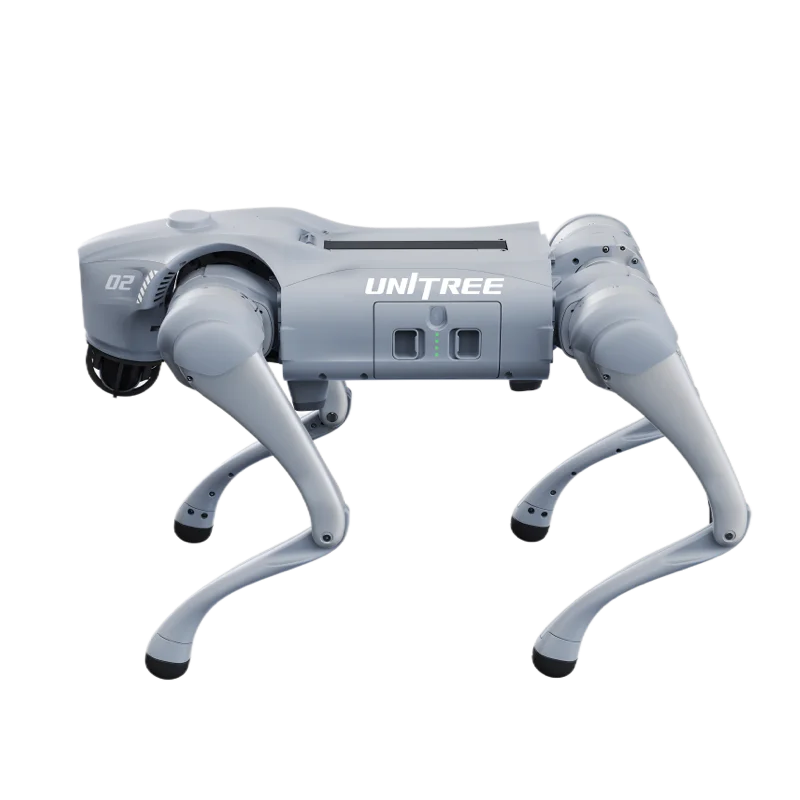
Choosing materials for a Unitree Go2 build is a balancing act between structural stiffness, total mass, and the manufacturing budget. While Aluminum 7075-T6 remains the gold standard for high-stress joints, advanced composites like Carbon Fiber and engineering plastics like PEEK are increasingly used to optimize specific leg dynamics. Alloyer specializes in machining all three for the open-source robotics community.
---
Key Differences at a Glance
| Property | Aluminum 7075-T6 | Carbon Fiber (CFRP) | PEEK | Winner |
|---|---|---|---|---|
| Density | 2.81 g/cm³ | 1.55 g/cm³ | 1.30 g/cm³ | PEEK (Lightest) |
| Yield Strength | 503 MPa | 600-800 MPa | 100 MPa | Carbon Fiber |
| Elastic Modulus | 71.7 GPa | ~70 GPa (tensile) | 3.6 GPa | Al 7075 / CF |
| Machinability | Good | Special (Tooling) | Medium | Al 7075 |
| Cost Index | 1.5x | 12.0x | 15.0x | Al 7075 |
| CNC Lead Time | 5-7 days | 7-12 days | 5-7 days | Al 7075 |
---
When to Choose Aluminum 7075-T6
For a Unitree Go2 (宇树), Aluminum 7075-T6 is the non-negotiable choice for "Point of Failure" components. This aerospace-grade alloy offers nearly double the yield strength of standard 6061, making it ideal for parts subjected to high torque and impact.
1. High-Torque Hip and Knee Joints
The hip pitch and knee actuators on a Go2 experience extreme momentary loads during jumps or recovery from falls. A 7075 housing ensures that bearing bores remain perfectly circular (within H7 tolerances) even under heavy cyclic loading, preventing the "bore ovalization" common in 6061 or plastic builds.2. Threaded Fastener Retention
Unlike PEEK or carbon fiber, 7075 provides excellent thread shear strength. For motor mounts that require high-torque M3 or M4 bolts, 7075 eliminates the need for Helicoils or threaded inserts, simplifying the BOM and reducing assembly weight.---
When to Choose Carbon Fiber (CFRP)
Carbon Fiber is used in the Unitree Go2 for one reason: reducing unsprung mass. In quadruped dynamics, the weight of the lower leg segments directly impacts the frequency at which the robot can cycle its legs (swing phase), which limits the maximum running speed.
1. Leg Segments and Thigh Links
By replacing an aluminum thigh segment with a CNC-machined carbon fiber plate or tube, you can reduce the weight of that component by nearly 45% while maintaining similar longitudinal stiffness. This allows for higher acceleration in the leg's swing phase and reduces the work required by the knee servos.2. Main Chassis Panels
For the Go2's internal electronics deck, carbon fiber provides a stiff, vibration-dampening platform that is significantly lighter than aluminum. While more expensive to machine, it is the primary choice for "weight-obsessed" builders aiming for maximum agility.---
When to Choose PEEK (Polyetheretherketone)
PEEK is a specialized engineering plastic that bridges the gap between metal and plastic. While its cost is the highest in the Go2 BOM, its unique properties make it indispensable for certain sensor-adjacent parts.
1. Electrically Insulated Mounts
For mounting high-frequency IMUs or sensitive RF equipment where aluminum interference is a concern, PEEK provides structural rigidity without the conductivity of metal. It is significantly stiffer and more dimensionally stable than Nylon or POM, ensuring that sensor alignment remains consistent across temperature swings.2. Wear-Resistant Sliders
PEEK has excellent natural lubricity. In the Go2's internal cable routing or sliding tensioners, PEEK parts can operate without external grease, reducing maintenance and preventing the accumulation of dust and debris inside the chassis.---
CNC Machining Considerations
Machining Aluminum 7075-T6
7075 is a "short chip" alloy, making it much easier to machine to high tolerances than 6061.Machining Carbon Fiber (CFRP)
CNC machining carbon fiber is an abrasive process that requires specialized diamond-coated tooling.Machining PEEK
As a high-performance thermoplastic, PEEK is sensitive to thermal buildup during machining.---
Cost Analysis: Building a Go2 Leg
To understand the impact of material selection, let's look at a typical CNC-machined leg link for a Go2:
The Verdict: Most builders should use Al 7075-T6 for all joints and reserve Carbon Fiber for the thigh/leg segments where weight reduction has the highest impact on performance.
---
FAQ
Can I mix 7075 and Carbon Fiber in the same assembly?
Yes, this is common in Go2 builds. However, you must be aware of galvanic corrosion. Carbon fiber is electrically conductive; when in direct contact with aluminum in a moist environment, it can cause the aluminum to corrode rapidly. We recommend using a thin layer of glass fiber (non-conductive) or an epoxy coating at the interface.Is PEEK really better than Aluminum for sensor mounts?
For structural stiffness, Aluminum is superior. However, PEEK is an electrical insulator and has much lower thermal conductivity. If your robot operates in varied environments or near high-power RF, PEEK provides a more stable environment for sensitive sensors.How much weight can I save by switching to Carbon Fiber?
For a full Go2 CNC kit (approx. 24 parts), switching all structural links from 7075 to Carbon Fiber can reduce the total mass of the CNC components by approximately 320 grams. This is a significant reduction in a 15kg robot.Does carbon fiber break more easily than aluminum?
Carbon fiber is "brittle." While it is stronger in tension than 7075, it does not "bend" before it breaks. In a high-speed collision, an aluminum joint might bend (repairable), while a carbon fiber part will shatter.---
More from Alloyer Blog
Ready to machine your Unitree Go2 parts? Upload your CAD files for an instant quote with free DFM review. We accept 1-piece prototyping and ship worldwide in 72 hours. Upload CAD & Get Quote →