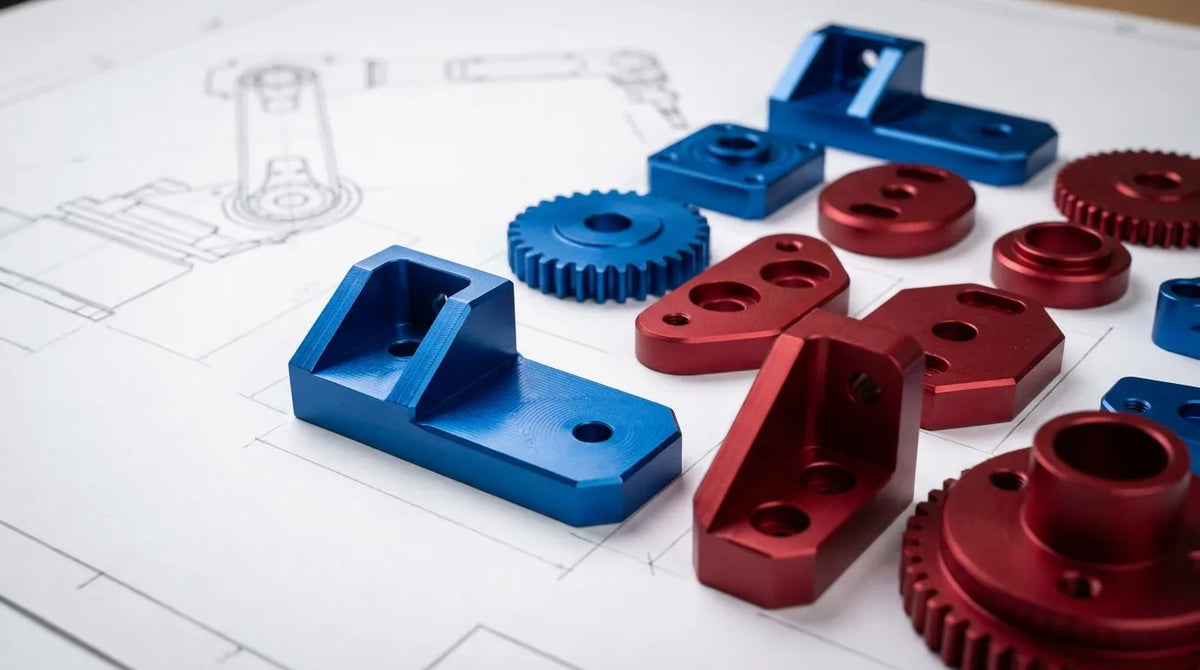
CNC machining for educational and competition robots is the specialized manufacturing process of producing custom structural chassis, drive train components, and specialized end-effectors for robots used in research, university labs, and global competitions like FIRST, VEX, and BattleBots. Alloyer specializes in student-friendly, rapid CNC prototyping for robotics teams, offering 72-hour delivery and 1-piece orders to help teams iterate faster between matches.

Key Things to Know About CNC Machining for Educational Robots
- Cost-Effectiveness First: Aluminum 6061-T6 is the industry standard for educational robots, providing the best balance of strength, machinability, and low material cost.
- Rapid Iteration is Critical: Competition timelines are tight. Alloyer’s 72-hour delivery ensures that broken parts can be replaced or design flaws fixed before the next tournament.
- Precision for Autonomy: Even for educational robots, SLAM sensors and encoders require precision mounts. CNC-machined pockets ensure H7 bearing fits and ±0.05° angular alignment.
- Lightweighting for Class Limits: Most competitions have strict weight limits. CNC pocketing and the use of materials like POM (Delrin) or Carbon Fiber are essential for staying under the limit.
- Team Branding: CNC parts can be Type II Anodized in a wide range of colors, allowing university teams to maintain a professional brand identity on the field.
Why Educational & Competition Robots Demand Specialized CNC Machining
In the competitive robotics arena, the difference between winning and failing often comes down to the reliability of the mechanical chassis. While 3D printing is great for non-structural shrouds, it lacks the fatigue resistance required for high-impact drivetrain and manipulator parts.
Impact Resistance and Reliability
Competition robots face constant collisions, falls, and stress from high-torque motors. 3D printed or laser-cut parts often delaminate under these loads. CNC machining from solid Aluminum 6061-T6 or 7075-T6 billets creates isotropic parts that can handle sudden shocks without shattering, ensuring the robot survives every round of the competition.
Teaching Real-World Engineering (DFM)
For university students and researchers, designing for CNC is a critical professional skill. Using Alloyer’s integrated AI DFM review, teams receive immediate feedback on whether their designs are machinable. This process teaches students to consider tool reach, internal radii, and wall thickness—bridging the gap between a CAD model and a functional physical machine.
Integration of High-Performance Materials
Educational robots often serve as testbeds for new AI algorithms. These systems require rigid, vibration-dampened mounts for high-speed cameras and LiDAR. CNC machining allows the use of PEEK for insulating electrical components or FR4 for rugged, non-conductive structural plates, providing a level of material versatility that standard maker-space tools cannot match.
Material Properties for Educational & Competition Robotics
| Material | Density (g/cm³) | Yield Strength (MPa) | Machinability | Cost Index* | Typical Use |
|---|---|---|---|---|---|
| Al 6061-T6 | 2.70 | 276 | Excellent | 1.0x | Chassis, motor mounts, gears |
| Al 7075-T6 | 2.81 | 503 | Good | 1.5x | High-impact arms, pivot pins |
| POM (Delrin) | 1.41 | 65 | Excellent | 0.8x | Bushings, low-load spacers |
| Carbon Fiber | 1.55 | 600+ | Poor (Special) | 12.0x | Main frames, lightweight links |
| FR4 (G10) | 1.85 | 340 | Fair | 1.2x | Electronics plates, side shields |
Critical Components: CNC Requirements
1. Drive Chassis Side-Plates
Function: The backbone of the robot that mounts the axles, gearboxes, and motors. Material: Al 6061-T6 (Standard) or Al 7075-T6 (Combat Robotics). Tolerance: ±0.05 mm for axle centers to ensure proper gear mesh. Surface Finish: Ra 3.2 μm (Standard) + Bright Anodize. CNC Challenges: Maintaining flatness over a large surface area while pocketing out 70%+ of the material for weight reduction. We use vacuum fixtures to ensure side-plates remain perfectly flat during high-speed milling.2. High-Reduction Gearbox Housings
Function: Enclose custom planetary or cycloidal stages to multiply motor torque. Material: Aluminum 7075-T6 or POM (for secondary stages). Tolerance: H7 (+0.015/0 mm) for bearing seats. Surface Finish: Ra 0.8 μm inside gear cavities. CNC Challenges: Machining deep, tight-tolerance bores for compound planetary gears. Alloyer uses multi-axis centers to bore all critical holes in a single setup, eliminating cumulative mounting errors.3. Actuated Grippers and End-Effectors
Function: The interface between the robot and the competition objects (balls, blocks, etc.). Material: POM (low friction) or Aluminum 6061-T6 (high strength). Tolerance: ±0.1 mm general; ±0.02 mm for linkage pivots. Surface Finish: Ra 1.6 μm. CNC Challenges: Complex, organic shapes designed for ergonomic contact. 5-axis CNC allows us to machine contoured "fingers" that improve grip reliability without increasing robot weight.Tolerances & Surface Finishes for Competition Parts
| Feature | Standard Tolerance | Required Surface Finish | Manufacturing Note |
|---|---|---|---|
| Bearing Bores | H7 (+0.021/0 mm) | Ra 0.8 μm | Crucial for smooth drivetrain motion |
| Mounting Holes | ±0.05 mm | Ra 3.2 μm | Enables modular part swapping |
| Gear Mesh Center | ±0.03 mm | Ra 1.6 μm | Prevents gear stripping under high torque |
| Aesthetic Faces | ±0.25 mm | Ra 3.2 μm + Anodize | Team colors and sponsor logos |
DFM Tips for Student Robotics Teams
1. Standardize Tool Radii
Avoid designing internal 90° corners. Maintain a minimum internal radius of 3 mm in all pockets. This allows the use of standard 6 mm end mills, which are more rigid and faster to run, reducing your part cost by up to 20%.
2. Wall Thickness and Strength
Maintain a minimum wall thickness of 1.5 mm for aluminum chassis plates. While thinner walls save weight, they can vibrate (chatter) during machining and may fail during high-speed robot collisions.
3. Hole Sizing for Fasteners
If you need to tap holes (e.g., M3 or M4), design the pilot holes exactly to the tap drill size. For 7075 aluminum, ensure a thread engagement depth of at least 2x the diameter to prevent stripping under the dynamic loads of a competition match.
4. Consolidate Assemblies with 5-Axis
Instead of bolting together three small brackets, use 5-axis CNC to machine them as a single monolithic part. This improves structural rigidity and saves the weight of extra bolts and nuts, making it easier to stay under the weight limit.
Cost & Lead Time for Robotics Teams
| Material | Typical Lead Time | Relative Cost | Min Qty | Recommended Use |
|---|---|---|---|---|
| Al 6061-T6 | 3-5 days | 1.0x | 1 pc | |
| Al 7075-T6 | 5-7 days | 1.5x | 1 pc | |
| POM (Delrin) | 3-5 days | 0.8x | 1 pc | |
| Carbon Fiber | 7-12 days | 12.0x | 1 pc |
Frequently Asked Questions
Q: Can Alloyer help with 1-piece prototyping for university research?
Yes. We accept orders as small as 1 piece. This is ideal for research labs validating a single actuator design or a new sensor mount before scaling to a full robot fleet.
Q: What is the best material for a combat robot (BattleBots) chassis?
We recommend Aluminum 7075-T6 for its extreme yield strength (503 MPa) or 17-4PH Stainless Steel for armor plates. 7075 provides the strength of steel at the weight of aluminum, which is critical for competition weight classes.
Q: How fast can I get a replacement part during a competition season?
Alloyer offers an express 72-hour delivery option for standard aluminum parts. If your chassis breaks during a regional event, we can have a replacement part at your lab or the next event venue within days.
Q: Does Alloyer offer student or university discounts?
While our pricing starts at a highly competitive $8.99 for standard AL 6061 parts, we also provide free DFM reviews that help student teams optimize their designs for the lowest possible manufacturing cost.
More from Alloyer Blog
Ready to win your next robotics competition?
Upload your CAD files to Alloyer’s AI engine for an instant price quote and free DFM check. We accept 1-piece orders and offer 72-hour delivery to keep your team on track.
Upload CAD & Get Quote →