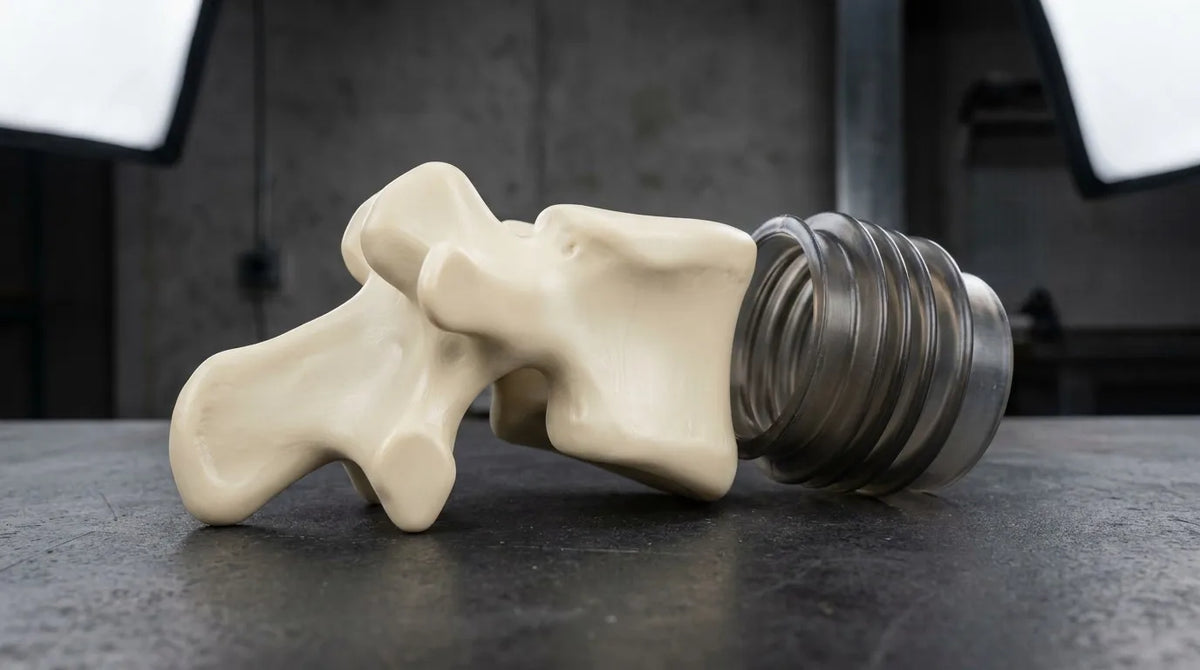
CNC machining for bio-inspired and soft robotics is the precision manufacturing process of producing complex, organic structural frames, multi-material joint interfaces, and specialized molds for elastomers used in robots that mimic biological systems. Alloyer specializes in 5-axis CNC machining for biomimetic designs, offering high-precision components in engineering plastics like PEEK and POM, as well as lightweight metals, with 72-hour delivery and integrated DFM review.

Key Things to Know About CNC Machining for Bio-Inspired Robotics
- Organic Geometry Complexity: Bio-inspired robots often use non-Euclidean, organic shapes (e.g., bird wing structures or fish fins). 5-axis simultaneous CNC machining is essential to achieve these contours without multiple setups.
- Material Versatility: Soft robotics often requires rigid "skeletons" embedded in flexible bodies. PEEK and Nylon 12 are preferred for their bio-compatibility and high strength-to-weight ratios.
- Surface Finish for Adhesion: For robots using over-molded soft materials, CNC-machined rigid cores require specific Ra 3.2 μm textures or mechanical interlocks to ensure a permanent bond with elastomers.
- Weight Sensitivity for Agility: Biomimetic movement (e.g., flapping or undulating) depends on low inertia. High-speed CNC pocketing can reduce part mass by up to 75% while maintaining the stiffness required for dynamic resonance.
- Rapid Prototyping for Evolution: Bio-inspired designs iterate through "evolutionary" testing. Alloyer's 1-piece prototyping allows engineers to test five different vertebral variations in a single 72-hour cycle.
Why Bio-Inspired Robotics Demand Specialized CNC Machining
Unlike traditional industrial robots built from heavy steel beams and right angles, bio-inspired robots mimic the efficiency and fluidity of nature. This shift in design philosophy imposes unique constraints on the manufacturing process.
Complex Stress Distribution and Organic Frames
Biological structures, such as bones or insect exoskeletons, distribute stress through variable cross-sections and internal lattices. Replicating these in a robot requires CNC machining from solid blocks of 7075-T6 aluminum or Titanium Grade 5. Unlike 3D printing, CNC ensures there are no internal voids or layer lines that could act as failure points under the high-frequency cyclic loading typical of biomimetic gait.
Precision Interfaces for Multi-Material Systems
Soft robotics often utilizes a "hybrid" approach—rigid CNC components providing the structure for soft, pneumatic, or tendon-driven actuators. The interface between these materials must be incredibly precise. A CNC-machined tendon guide made of POM (Delrin) must have a mirror-like Ra 0.4 μm internal finish to prevent friction-induced heating and wear on the synthetic tendons.
Thermal Management in Compact Enclosures
Bio-inspired robots often pack motors and electronics into small, organic-shaped joint housings. CNC-machined enclosures can incorporate integral heat sinks and cooling channels directly into the frame geometry. This high level of integration is only possible through multi-axis milling, allowing for higher power density without exceeding the thermal limits of surrounding soft materials.
Material Properties for Bio-Inspired Robotics Components
| Material | Density (g/cm³) | Yield Strength (MPa) | Machinability | Cost Index* | Typical Use |
|---|---|---|---|---|---|
| Al 6061-T6 | 2.70 | 276 | Excellent | 1.0x | Main structural frames, links |
| PEEK | 1.30 | 100 | Fair | 15.0x | Vertebral links, tendon guides |
| Ti-6Al-4V | 4.43 | 880 | Poor | 8.0x | High-load joints, anchor pins |
| Nylon 12 (PA12) | 1.01 | 50 | Good | 0.7x | Lightweight covers, spacers |
| TPU (CNC Grade) | 1.20 | 30 | Poor (Cryogenic) | 5.0x | Flexible hinges, gaskets |
Critical Components: CNC Requirements
1. Organic Vertebral Links
Function: Provide the structural spine for snake-like or mammalian robots. Material: PEEK or Aluminum 7075-T6. Tolerance: ±0.05 mm on pivot ball centers. Surface Finish: Ra 0.8 μm for smooth rotation. CNC Challenges: Machining spherical ball-joints with undercuts. Alloyer utilizes simultaneous 5-axis tool paths to generate true spherical surfaces with zero faceted marks, ensuring zero-play assembly.2. High-Friction Tendon Guides
Function: Route synthetic fiber tendons through the robot body with minimal energy loss. Material: POM (Delrin) or Teflon-infused Nylon. Tolerance: ±0.02 mm internal diameter. Surface Finish: Ra 0.4 μm (Polished). CNC Challenges: Achieving high-gloss internal finishes in small diameter holes. We use specialized micro-boring tools and post-machining polishing to reduce friction coefficients by 40% versus standard milling.3. Integrated Mold Tools for Soft Actuators
Function: Precision molds for casting silicone or TPU soft muscles. Material: Al 6061-T6 (with Teflon coating). Tolerance: ±0.01 mm on mating surfaces. Surface Finish: Ra 0.2 μm (Mirror finish). CNC Challenges: Complex cavity milling with extremely small internal radii (down to 0.5 mm). Alloyer’s high-RPM spindles allow for the use of micro-endmills to capture every biological detail of the actuator design.Tolerances & Surface Finishes for Bio-Inspired Parts
| Feature | Specified Tolerance | Required Surface Finish | Manufacturing Note |
|---|---|---|---|
| Joint Pivot Bores | H7 (+0.021/0 mm) | Ra 0.8 μm | Required for millions of flex cycles |
| Elastomer Bonding Faces | ±0.1 mm | Ra 3.2 μm (Textured) | Ensures mechanical bond with silicone |
| Tendon Routing Channels | ±0.03 mm | Ra 0.4 μm | Crucial for energy efficiency |
| Mounting Interfaces | ±0.025 mm | Ra 1.6 μm | Ensures modularity of limbs |
DFM Tips for Bio-Inspired Robot Parts
1. Minimize Sharp Transitions in Wall Thickness
Bio-inspired designs often change from thick load-bearing sections to thin flexible ribs. Ensure these transitions are gradual (using fillets with R >= 2x wall thickness) to prevent stress concentrations and warping during the CNC process.
2. Optimize Radii for 5-Axis Access
When designing organic cavities, maintain a minimum internal radius of 3 mm. This allows for the use of standard tooling, which is more rigid and cost-effective than micro-tools, reducing machining time by 25%.
3. Incorporate Assembly Alignment Features
Since bio-inspired robots often involve dozens of interlocking segments, design small CNC-machined registration pins (±0.01 mm) or "keys" into the mating faces. This eliminates the need for expensive external jigs during assembly.
4. Leverage PEEK for Insulated Stiffness
If your robot requires electrical insulation (e.g., for electro-adhesive pads) but needs the rigidity of aluminum, use PEEK. It can be machined to the same ±0.01 mm tolerances as metal while providing excellent dielectric properties.
Cost & Lead Time Reference
| Material | Typical Lead Time | Relative Cost | Min Qty | Recommended Use |
|---|---|---|---|---|
| Al 6061-T6 | 3-5 days | 1.0x | 1 pc | |
| PEEK | 5-7 days | 15.0x | 1 pc | |
| POM (Delrin) | 3-5 days | 0.8x | 1 pc | |
| Titanium Gr 5 | 7-10 days | 8.0x | 1 pc |
Frequently Asked Questions
Q: Can Alloyer machine flexible materials like TPU for bio-inspired hinges?
Yes. We machine engineering-grade TPU (Shore 90A+) using cryogenic cooling and specialized tooling. This ensures the material remains rigid enough for the cutting tool to produce clean, burr-free edges within ±0.1 mm tolerances.
Q: How do you handle complex organic curves from biological scans?
We import high-resolution mesh or STEP files directly into our 5-axis CAM software. By using simultaneous 5-axis milling, we can maintain consistent surface finishes of Ra 0.8 μm across complex, non-planar geometries without "stairstepping" artifacts.
Q: Why is 1-piece prototyping critical for bio-inspired hardware?
Biomimetic designs often rely on complex dynamics that are difficult to simulate. Machining a single vertebral link or fin hinge in the actual production material (e.g., 7075 Al) in 72 hours allows for physical "evolutionary" testing before committing to a full scale-up.
Q: Does Alloyer support over-molding of soft materials onto CNC parts?
While we do not perform the molding in-house, we provide the precision CNC-machined rigid cores and the high-precision mold tools (with Ra 0.2 μm mirror finishes) required for successful soft robotics over-molding processes.
More from Alloyer Blog
Need precision biomimetic robot parts fast?
Upload your CAD files to Alloyer’s AI engine for an instant price quote and a free DFM check. We accept 1-piece prototyping orders and offer 72-hour delivery to help your design evolve.
Upload CAD & Get Quote →