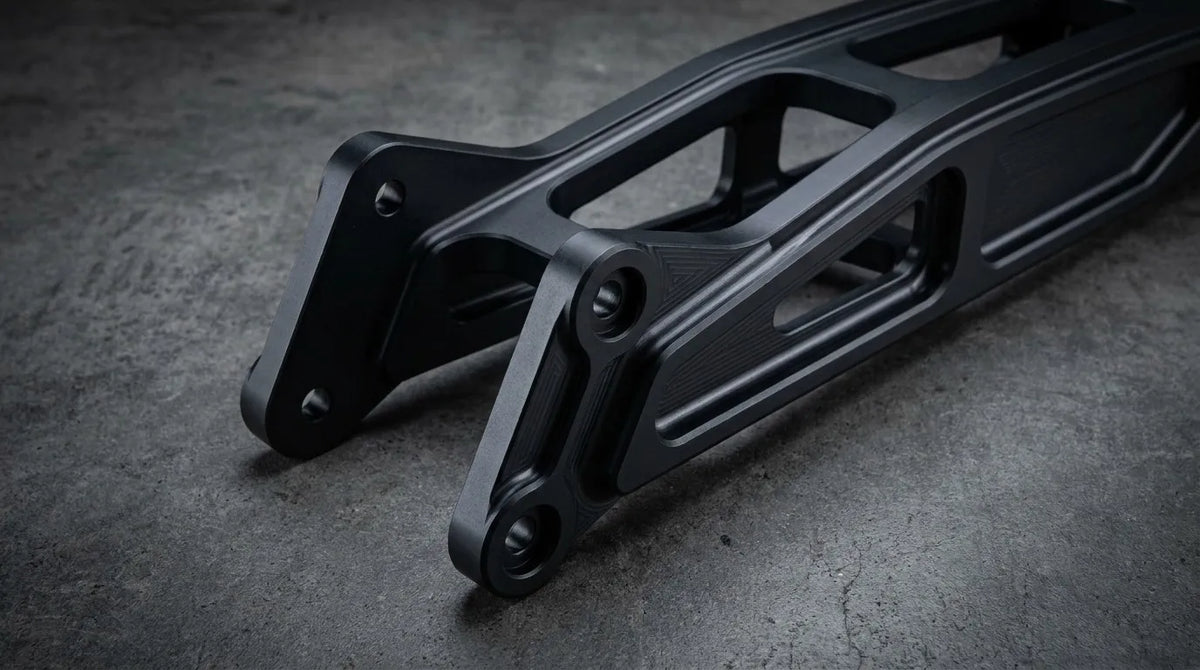
CNC machining for search and rescue robots is the specialized manufacturing process of producing high-strength chassis frames, waterproof sensor enclosures, and impact-resistant articulated limbs for robots operating in hazardous disaster zones. Search and rescue (SAR) robotics demand an extreme strength-to-weight ratio, absolute sealing integrity (IP67/IP68) for moisture and dust protection, and dimensional stability under extreme mechanical shock. Alloyer specializes in precision 5-axis CNC machining for ruggedized robotics with 72-hour delivery, zero minimum order quantity, and integrated DFM reviews.

Key Things to Know About CNC Machining for Search & Rescue Robots
- Impact Resistance First: SAR robots face debris, falls, and crushing loads. Aluminum 7075-T6 is the material of choice, offering the yield strength of structural steel at one-third the mass.
- Sealing Integrity (IP67/IP68): Enclosures for embodied AI and battery packs must be waterproof. CNC-machined O-ring glands require sub-micron flatness and Ra 0.8 μm finishes to prevent seal bypass.
- Sensor Protection: Optical and LiDAR ports require precision-machined stepped bores with consistent shoulder depths to mount sapphire glass or acrylic lenses without inducing optical distortion.
- Weight Sensitivity for Portability: Many SAR robots are man-portable or deployable via drone. High-speed CNC pocketing can remove up to 80% of a part’s mass while maintaining structural safety factors.
- Surface Durability: Type III Hardcoat Anodizing provides the necessary abrasion resistance against silica dust, mud, and saltwater spray in coastal disaster scenarios.
Why Search & Rescue Robots Demand Specialized CNC Machining
Disaster environments — ranging from earthquake rubble to flooded subway tunnels — are the most Hostile operating theaters for robotics. Standard off-the-shelf components frequently fail under these conditions.
Dynamic Impact and Fatigue Life
A search and rescue robot navigating a collapsed building endures continuous vibration and sudden peak impact loads. Components produced via casting or 3D printing often contain internal stress risers that lead to catastrophic failure. CNC machining from annealed 7075-T6 aluminum or Titanium Grade 5 billets ensures an isotropic internal structure, providing the predictable fatigue life required for high-stakes missions.
Precision Alignment for SLAM Sensors
For autonomous navigation (SLAM) to work in a smoke-filled or debris-cluttered environment, sensors must stay perfectly aligned relative to the robot's coordinate system. CNC-machined structural mounts provide the high Young's Modulus required to suppress high-frequency oscillations, ensuring clean data for the AI's perception layers.
Rapid Iteration for Mission-Specific Tooling
Disaster scenarios are unpredictable. An urban SAR mission may require a different end-effector than a wilderness rescue. Alloyer’s 1-piece prototyping and 72-hour delivery allow robotic teams to design, machine, and test mission-specific hardware in the time it takes to deploy to the site.
Material Properties for SAR Robotics Components
| Material | Density (g/cm³) | Yield Strength (MPa) | Impact Toughness | Machinability | Cost Index* | SAR Application |
|---|---|---|---|---|---|---|
| Al 6061-T6 | 2.70 | 276 | Moderate | Excellent | 1.0x | Outer shrouds, battery boxes |
| Al 7075-T6 | 2.81 | 503 | High | Good | 1.5x | Chassis frames, link arms |
| Ti-6Al-4V (Gr5) | 4.43 | 880 | Extreme | Poor | 8.0x | Heavy-duty grippers, pivot pins |
| SS 316L | 8.00 | 290 | High | Fair | 2.2x | Corrosion-resistant sub-sea links |
| PEEK | 1.30 | 100 | Good | Medium | 15.0x | Insulated sensor mounts, slides |
Critical Components: CNC Requirements
1. Waterproof Actuator Housings
Function: Protect the high-torque brushless motors and reducers from environmental flooding. Material: Al 6061-T6 or Al 7075-T6. Tolerance: O-ring groove depth within ±0.03 mm; concentricity within 0.05 mm. Surface Finish: Ra 0.8 μm inside seal glands. CNC Challenges: Maintaining sub-micron flatness on large mating flanges to prevent "seeping" under high-pressure water spray. Alloyer utilizes face-turning with wiper inserts to achieve the required seal quality directly from the machine.2. All-Terrain Linkage Links
Function: High-strength arms that support the robot's weight while climbing over rubble. Material: Al 7075-T6 (with Hardcoat Anodize). Tolerance: H7 (+0.021/0 mm) for pivot bores; ±0.03 mm for total link length. Surface Finish: Ra 1.6 μm + Type III Hardcoat. CNC Challenges: Maintaining wall thicknesses of 1.5 mm while machining deep internal weight-reduction pockets. We utilize custom dampening fixtures to prevent tool "chatter" in thin-walled sections.3. Integrated Sensor Mounts
Function: Provide a rigid, vibration-free platform for LiDAR and multi-spectral cameras. Material: Aluminum 7075-T6 or PEEK. Tolerance: Angular alignment of mounting faces within ±0.05°. Surface Finish: Ra 1.6 μm + Matte Black Anodize (to reduce optical reflections). CNC Challenges: High-precision multi-axis boring to ensure sensors are perfectly co-axial.Tolerances & Surface Finishes for SAR Robotics
| Feature | Specified Tolerance | Required Surface Finish | Manufacturing Notes |
|---|---|---|---|
| Bearing Bore | H7 (+0.015/0 mm) | Ra 0.8 μm | Essential for high-impact durability |
| Seal Gland (Face) | Flatness 0.02 mm | Ra 0.4 μm | Mirror finish to prevent micro-leaks |
| Pivot Shaft Fit | g6 (-0.007/-0.020 mm) | Ra 0.4 μm | Requires cylindrical grinding for Ra 0.2 if needed |
| Mounting Patterns | ±0.025 mm | Ra 3.2 μm | Critical for modular limb replacement |
DFM Tips for SAR Robot Parts
1. Optimize Internal Radii for Impact Strength
SAR robots undergo massive vibrational stress. Avoid sharp internal 90° corners. Maintain a minimum internal radius of 3 mm (R3) in structural pockets. This not only strengthens the part but allows for more rigid CNC tools, reducing machining time and cost by 20%.
2. Wall Thickness Safety Margins
While mass is critical, maintaining a minimum wall thickness of 1.5 mm in Al 7075 prevents warping during the hardcoat anodizing process and provides a safety margin against surface pitting from rubble.
3. Incorporate "Drainage" Channels
If a component is designed for washdown or operation in mud, design internal cavities with 2 mm drainage slopes and open-faced pocketing. This prevents dirt accumulation that can cause unbalanced weight and localized corrosion.
4. Use 5-Axis to Consolidate Assemblies
Instead of multiple brackets bolted together (which adds leak paths), design monolithic joint links. 5-axis CNC machining can produce a single complex part that replaces a 3-part assembly, improving rigidity and sealing while lowering total mass.
Cost & Lead Time Reference
| Material | Typical Lead Time | Relative Cost | Min Qty | Recommended Use |
|---|---|---|---|---|
| Al 6061-T6 | 3-5 days | 1.0x | 1 pc | |
| Al 7075-T6 | 5-7 days | 1.5x | 1 pc | |
| SS 316L | 5-7 days | 2.2x | 1 pc | |
| Ti-6Al-4V | 7-10 days | 8.0x | 1 pc | |
| PEEK | 5-7 days | 15.0x | 1 pc |
Frequently Asked Questions
Q: What is the best material for a search and rescue robot chassis?
We recommend Aluminum 7075-T6. It offers the yield strength (503 MPa) comparable to structural steel but at 1/3 the mass. When combined with a Type III Hardcoat Anodize, it provides extreme abrasion resistance and surface protection for operations in rubble and mud.
Q: How do you achieve a certified IP67 seal with CNC parts?
IP67 requires a leak-proof seal under 1 meter of water. Alloyer machines O-ring glands to a Ra 0.8 μm finish with a flatness tolerance of ±0.02 mm on mating surfaces. All tool paths are concentric to the seal axis to prevent microscopic leak channels.
Q: Can Alloyer machine complex, organic curves for humanoid-SAR limbs?
Yes. Using our simultaneous 5-axis CNC machining centers, we can produce complex, organic geometries that allow for more compact joint envelopes and ergonomic handling. We hold ±0.03 mm tolerances on these organic profiles.
Q: Why is 1-piece CNC prototyping critical for SAR hardware?
Search and rescue missions are time-critical. 1-piece CNC allows you to test a new gripper or link in the real-world material (e.g., 7075 Aluminum) in just 72 hours, validating the mechanical durability and sealing integrity before committing to production.
More from Alloyer Blog
Need precision ruggedized SAR robot components fast?
Upload your CAD files to Alloyer’s automated engine for an instant price quote and a free DFM check. Standard AL 6061 parts start from $8.99, and we accept 1-piece prototyping orders.
Upload CAD & Get Quote →