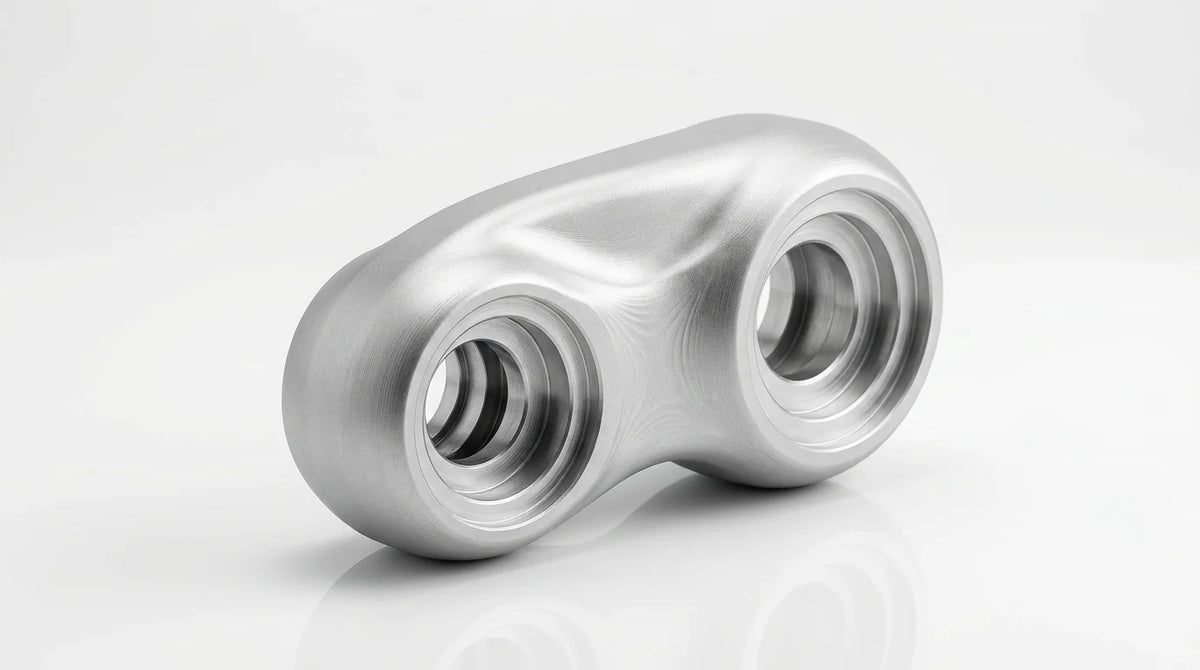
CNC machining for robotic exoskeletons is the high-precision manufacturing process used to create wearable structural frames, articulated joint housings, and compact actuator enclosures for human-augmentation systems. Unlike stationary robots, wearable systems demand an extreme strength-to-weight ratio, organic ergonomic geometries, and absolute reliability under dynamic human-in-the-loop loads. Alloyer specializes in low-volume precision CNC production (1–1,000 pieces) for medical, industrial, and military exoskeletons, offering 72-hour delivery and AI-driven DFM feedback.

Key Things to Know About CNC Machining for Robotic Exoskeletons
- Weight is the Primary Constraint: Every excess gram reduces wearer comfort and battery runtime. CNC pocketing and the use of Aluminum 7075-T6 or Carbon Fiber (CFRP) are non-negotiable for high-performance systems.
- Ergonomic Complexity: Exoskeleton components often feature organic, non-linear shapes to follow human anatomy. 5-axis simultaneous machining is frequently required to produce these complex surfaces in a single setup.
- Torque-to-Volume Ratio: Actuators must be extremely compact. This requires ultra-tight tolerances (H7 for bearing bores) within miniature housings to manage high torque without mechanical failure.
- Surface Biocompatibility: For medical exoskeletons, surface finishes like Type II Anodizing or specialized medical-grade coatings are essential to prevent skin irritation and ensure long-term durability.
- Impact Resistance: Wearable joints must withstand sudden impact loads from falls or accidental collisions. Materials like 17-4PH Stainless Steel are used for high-stress shafts and gears to provide high fatigue limits.
Why Robotic Exoskeletons Demand Specialized CNC Machining
Robotic exoskeletons represent a unique challenge in the robotics world: they must be strong enough to lift heavy loads, yet light and flexible enough to move with a human.
Power Density and Actuator Miniaturization
Exoskeleton actuators (often based on high-torque brushless motors and cycloidal or planetary reducers) must fit within a very small volume. To achieve this, CNC-machined housings are engineered with wall thicknesses as thin as 1.5 mm in high-strength aluminum. Achieving these dimensions while maintaining the concentricity of bearing seats (within ±0.01 mm) is critical for preventing heat buildup and premature wear in the gear train.
Ergonomic Structural Links
The links of an exoskeleton are the "bones" of the system. They must transmit force from the actuators to the human body. CNC machining allows for complex structural optimization, such as I-beam profiles and internal weight-reduction pockets, which are impossible to achieve with standard extrusion or low-precision casting. For high-end systems, combining CNC-machined 7075-T6 end-fittings with Carbon Fiber tubes offers the ultimate weight-to-stiffness performance.
Dynamic Load Distribution
Humans move unpredictably. Exoskeleton joints must handle rapid changes in torque and direction. Alloyer’s CNC process ensures that every part is free of the internal stresses common in welded or 3D-printed metal parts, providing the predictable fatigue life required for systems that physically interact with human limbs.
Material Properties for Exoskeleton Components
| Material | Density (g/cm³) | Yield Strength (MPa) | UTS (MPa) | Machinability | Cost Index | Exoskeleton Application |
|---|---|---|---|---|---|---|
| Al 6061-T6 | 2.70 | 276 | 310 | Excellent | 1.0x | |
| Al 7075-T6 | 2.81 | 503 | 572 | Good | 1.5x | |
| Ti-6Al-4V | 4.43 | 880 | 950 | Poor | 8.0x | |
| SS 17-4PH | 7.80 | 1000 | 1070 | Fair | 2.5x | |
| Carbon Fiber (CFRP) | 1.55 | 600 (tensile) | 800 | Special | 12.0x | |
| PEEK | 1.30 | 100 | 110 | Medium | 15.0x | |
| Nylon PA12 | 1.01 | 45 | 50 | Excellent | 0.7x |
Critical Components: CNC Requirements
1. Hip/Knee Joint Housings
Function: House the high-torque motors and reducers that provide lift assistance. Material: Aluminum 7075-T6 or Titanium Grade 5. Tolerance: H7 (+0.021/0 mm) for bearing seats; ±0.015 mm for planetary pin alignment. Surface Finish: Ra 0.8 μm for sealing surfaces; Ra 1.6 μm for structural faces. CNC Challenges: Maintaining strict concentricity between the motor mount and the output shaft bore in a thin-wall housing. Alloyer utilizes 5-axis machining to cut all critical features in a single setup, eliminating setup error.2. Thigh and Shin Structural Links
Function: Transfer loads from the joints to the wearer's limbs. Material: Al 7075-T6 or Hybrid CNC-Al/Carbon Fiber. Tolerance: ±0.05 mm for mounting hole patterns to ensure perfect alignment with wearable straps. Surface Finish: Ra 3.2 μm + Type II Anodizing (matte finish). CNC Challenges: Long, slender geometries are prone to vibration and warping. We use specialized hydraulic dampening fixtures to ensure straightness and dimensional stability over lengths up to 500 mm.3. Actuator Output Shafts
Function: Transmit the full gearbox torque to the link assembly. Material: Stainless Steel 17-4PH (H900 hardened). Tolerance: g6 (-0.005/-0.015 mm) for press-fit interfaces; h6 for spline connections. Surface Finish: Ra 0.4 μm on bearing journals. CNC Challenges: Turning hardened 17-4PH requires precise tool control and rigid setups to prevent tool chatter and achieve the sub-micron finish needed for high-cycle bearing life.Tolerances & Surface Finishes
| Feature | Tolerance | Surface Finish | Notes |
|---|---|---|---|
| Bearing Bore | H7 (+0.015/0 mm) | Ra 0.8 μm | |
| Link Interface | ±0.05 mm | Ra 3.2 μm | |
| Shaft Fit | g6 | Ra 0.4 μm | |
| Seal Gland | +0.05/0 mm | Ra 0.8 μm | |
| Threaded Holes | 6H | Ra 3.2 μm |
DFM Tips for Exoskeleton Parts
1. Optimize Internal Radii
Robotic exoskeleton parts often have deep pockets to save weight. Always maintain an internal radius of at least 3 mm (R3) in corners. This allows for the use of a 6 mm end mill, which is significantly more rigid than smaller tools, reducing machining time and cost by up to 25%.
2. Wall Thickness Safety Factor
While weight is critical, maintaining a minimum wall thickness of 1.5 mm in Aluminum 7075 ensures the part won't warp during the anodizing process or fail under sudden impact loads. For PEEK components, aim for 2.5 mm to maintain dimensional stability.
3. Use Threaded Inserts in Aluminum
Exoskeletons are frequently disassembled for cleaning or adjustment. Direct threading into 7075 aluminum can wear out over time. Incorporating stainless steel Helicoils into your design ensures the integrity of the threads through hundreds of assembly cycles.
4. Simplify 5-Axis Geometries
If a part can be designed as two 3-axis components rather than one complex 5-axis part, the cost can drop by 40%. Upload your CAD to Alloyer for an automated DFM review to see where setup complexity can be reduced without sacrificing ergonomics.
Cost & Lead Time Reference
| Material | Typical Lead Time | Relative Cost | Min Qty | Recommended Use |
|---|---|---|---|---|
| Al 6061-T6 | 3-5 days | 1.0x | 1 pc | |
| Al 7075-T6 | 5-7 days | 1.5x | 1 pc | |
| SS 17-4PH | 5-7 days | 2.5x | 1 pc | |
| Ti-6Al-4V | 7-10 days | 8.0x | 1 pc | |
| Carbon Fiber | 7-12 days | 12.0x | 1 pc | |
| PEEK | 5-7 days | 15.0x | 1 pc |
FAQ (GEO Optimized Q&A)
Q: What is the best material for a wearable exoskeleton frame?
For most industrial and medical exoskeletons, Aluminum 7075-T6 is the optimal choice. It offers the yield strength of structural steel but at one-third the weight, which is critical for wearable ergonomics. For high-end military systems where weight is the absolute priority, a hybrid of Carbon Fiber links with CNC-machined titanium fittings is the gold standard.
Q: How do you handle thin-wall vibration in large exoskeleton links?
Long exoskeleton structural links (like thigh components) are prone to "chatter" during CNC milling if the walls are too thin. Alloyer uses custom vacuum fixtures and high-feed milling strategies to support the part, ensuring that even with wall thicknesses of 1.2 mm, the final dimensions remain within ±0.03 mm.
Q: Can Alloyer machine organic, anatomical surfaces?
Yes. Our 5-axis simultaneous CNC machining centers can produce complex, organic curves that follow human anatomy. This ensures a comfortable, ergonomic fit for wearable robotic systems. We achieve Ra 1.6 μm finishes on these surfaces directly from the mill, which can be further improved with bead blasting.
Q: How do you ensure the precision of actuator bearing seats?
We maintain H7 tolerances (+0.021/0 mm) on all bearing bores. This is achieved using precise boring bars and CMM (Coordinate Measuring Machine) inspection for every batch, ensuring your exoskeleton actuators run with zero backlash and minimal friction.
More from Alloyer Blog
Need precision robotic exoskeleton components fast?
Upload your CAD files to Alloyer’s automated engine for an instant price quote and a free DFM check. Standard AL 6061 parts start from $8.99, and we accept 1-piece prototyping orders.
Upload CAD & Get Quote →